Stakich Yellow Beeswax Pellets, Natural Cosmetic Grade, 5 Pound in 1 Pound Bags Review (2026)
Updated September 14, 2026 · Research-based review
Our verdict
Cosmetic grade yellow beeswax pellets in five separate one pound bags suit makers pouring natural pillars, tapers and votives with a honey scent. The yellow tint limits bright dye colors, and pure beeswax runs hot enough that wick sizing needs its own trial pours.
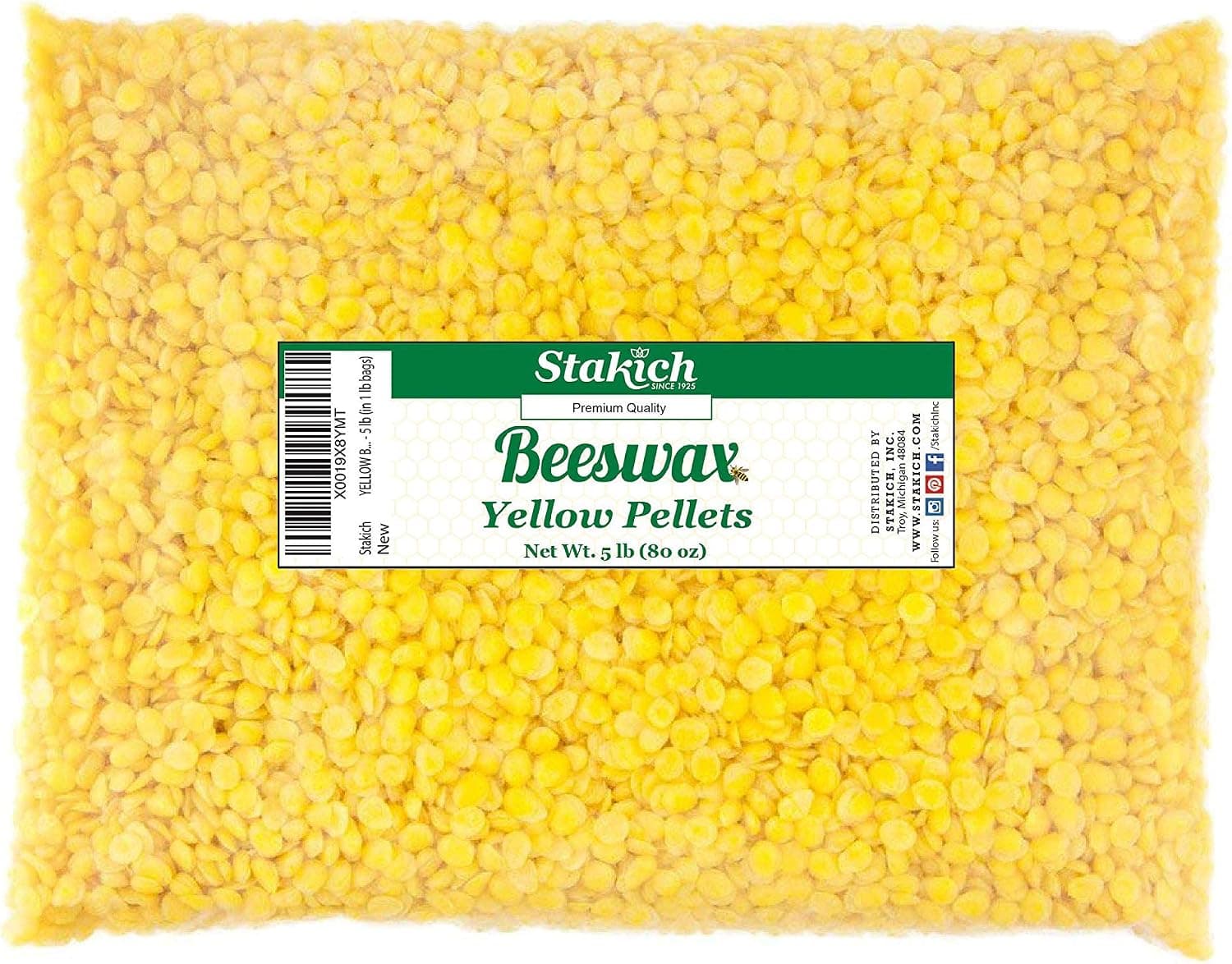
Stakich yellow cosmetic grade beeswax pellets, 5 pound split into 1 pound bags for easy portioning.
Price range: $ (Budget)
What we liked
- + 1 pound bags keep unopened wax clean until you need it
- + Natural yellow color and honey aroma suit rustic pillar candles
- + 5 pound supply covers many tapers, votives and pillars
Trade-offs
- - Yellow tint limits bright or pastel dye colors
- - Pure beeswax burns hot, so wick sizing takes trial pours
Who this beeswax suits
Candle makers who want a natural, single ingredient wax for pillars, tapers and votives, rather than a paraffin or soy blend, are the target audience for these Stakich yellow beeswax pellets. The five pound quantity split into five separate one pound bags suits someone running enough small batches to use it up before it needs a second look, and the natural yellow color and honey scent fit rustic, unscented or lightly scented candle styles well. It is a weaker fit for makers chasing bright, pastel or true white finished candles, since the yellow tint will shift any dye color added, and for high volume production where a bulk block format would be easier to portion than pellets.
Grade, sourcing and form
This is cosmetic grade beeswax, filtered and collected from bees foraging in unsprayed, pesticide free fields, which is a higher purity standard than raw or craft grade wax sold for basic candle pouring. The pellet form is the practical detail that stands out day to day, since pellets melt faster and measure by volume or weight far more easily than a solid block that needs chopping or grating first. Packaging the five pounds into five separate one pound bags keeps most of the batch sealed away from dust and air while you work through an open bag, which matters for a wax that will pick up its surrounding smell if left uncovered near strong fragrance oils or cleaning products.
Working with it in the pour
Pure beeswax runs hotter than paraffin or soy wax while burning, so a wick sized for those waxes will often be undersized here, and the trade-offs noted for this product flag exactly that, wick sizing needs trial pours rather than reusing a chart built for a different wax. Start with a test candle in your actual container, burn it fully and check for soot, tunneling or an overly large flame before committing a whole batch to one wick size. The natural honey scent carries through lightly scented or unscented pours, which many makers treat as a feature for rustic candles, though it does mean this wax competes for aroma space if you add a strong fragrance oil on top of it.
Trade-offs and how it compares
The clearest limit is color. Yellow beeswax will muddy bright or pastel dye colors, so a maker who needs a true white or vivid pastel candle should look at the brand's own white beeswax pellets instead, which share the same cosmetic grade and pellet form without the yellow cast. Compared with a paraffin pillar wax such as IGI 4625, which is formulated specifically for mold release and a consistent pillar shape, pure beeswax pillars can be softer and stickier to unmold, so beeswax suits makers prioritizing a natural ingredient list over production speed and easy demolding.
Verdict and who should pick something else
For a maker who wants a natural, cosmetic grade wax with a honey scent for pillars, tapers or votives, and is prepared to test wick sizing before a full batch, this wax backs up our score of 8.8 out of 10. Pick the white beeswax version instead if color accuracy matters, or choose a purpose built pillar blend if fast, reliable mold release is the priority over an all natural ingredient list. Either way, keep the one pound bags sealed between uses so the wax stays free of dust and stray scent.
Frequently asked questions
Will this beeswax work with my usual soy or paraffin wick chart?
Not reliably. Pure beeswax burns hotter than soy or paraffin, so test your usual wick size in a sample pour before committing a full batch.
Can I use these pellets for lip balm or lotion instead of candles?
Yes, cosmetic grade beeswax pellets like these are commonly used in lip balm, lotion and soap recipes as well as candles.
Why is the wax yellow instead of white?
This is the natural, unbleached color of beeswax as collected, and Stakich also sells a white beeswax pellet version if you need a lighter base for dyed candles.
Do the pellets need to be melted differently than a solid block?
Pellets melt faster and are easier to measure by scoop or scale than a solid block, since there is no chopping or grating step first.
Prices change often, so check the current price and availability on Amazon.
Check price on AmazonCandle Making Nest may earn a commission from the link above.