Stakich White Beeswax Pellets, Natural Cosmetic Grade, 5.25 Pounds in 6 x 14 Ounce Bags Review (2026)
Updated September 14, 2026 · Research-based review
Our verdict
A 5.25 pound supply of natural cosmetic grade white beeswax split across six 14 ounce bags, giving regular candle makers a generous stock without one oversized block to break down. White beeswax offers a cleaner base for dyed colors than yellow variants, at the cost of losing beeswax's natural honey toned scent.
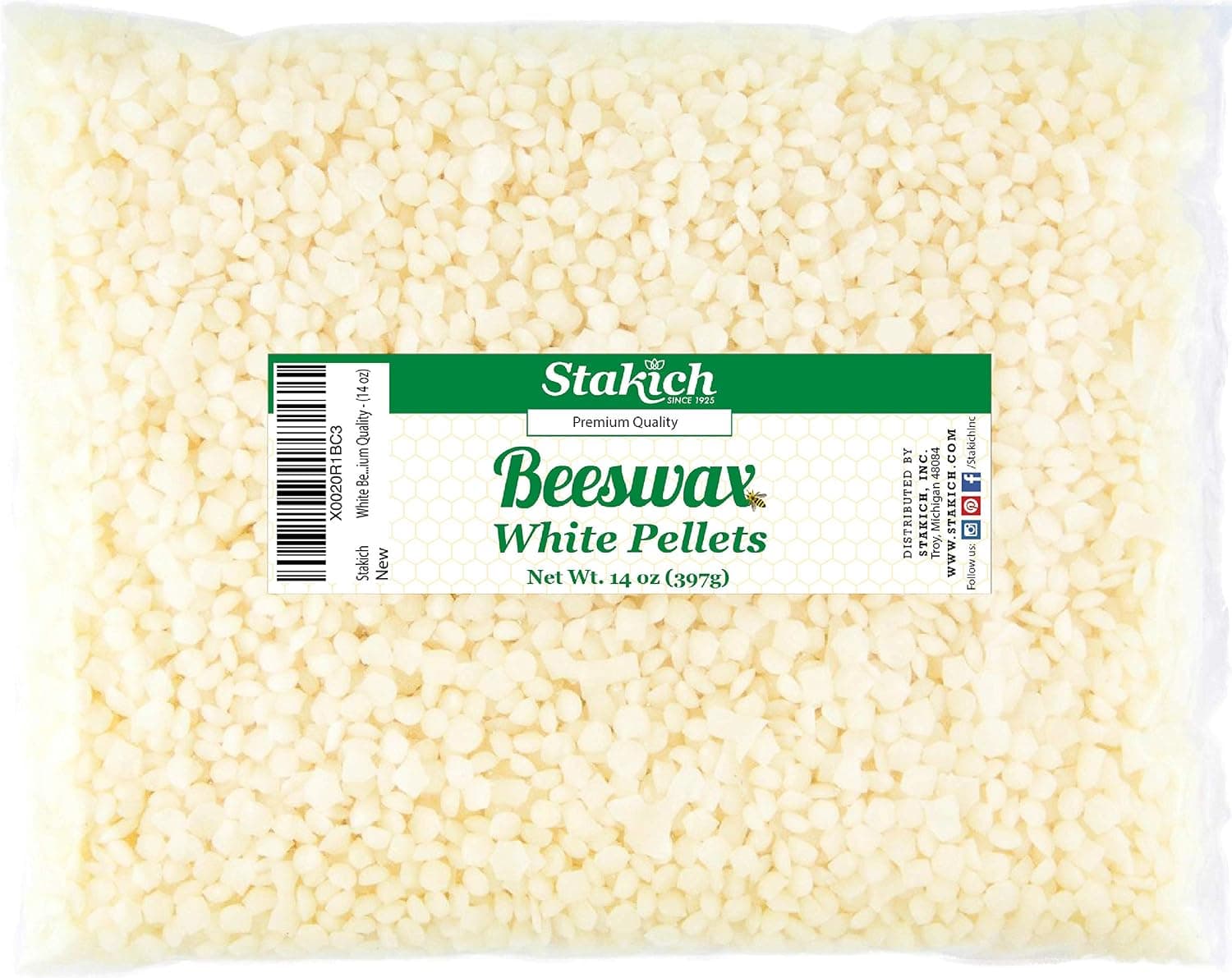
Stakich white beeswax pellets totaling 5.25 pounds in 6 x 14 ounce bags, handy for many small batches.
Price range: $ (Budget)
What we liked
- + 6 x 14 ounce bags make portioning small batches simple
- + White pellets are a clean base for colored or scented candles
- + 5.25 pounds overall is a generous supply for regular makers
Trade-offs
- - Smaller bags create more packaging than one bulk bag
- - White beeswax has had its natural color and some aroma removed
Who this bulk pack fits
This pack suits candle makers who have already decided beeswax is their preferred material and want enough on hand for several batches without reordering every project, since 5.25 pounds covers a meaningful production run across pillars, containers or blended wax recipes. Splitting the total into six 14 ounce bags rather than one solid block makes portioning easier, since a maker can grab one bag for a smaller batch without needing to break or weigh off a chunk from a larger block. It also suits crossover use in skin care recipes, since the listing markets it as natural cosmetic grade, appropriate for lotions and balms as well as candles. A first time beeswax user unsure if they will stick with the material is better served by a smaller single pound bag to test before committing to this larger quantity.
White beeswax and the bag format explained
White beeswax starts as natural beeswax that has been further processed to remove its characteristic yellow color and much of its natural aroma, producing a cleaner, more neutral base than yellow or raw beeswax. That neutral starting point matters for makers who want dye colors to read true and bright rather than shifted warmer by an underlying yellow tint, which is a common issue when coloring natural yellow beeswax. The pellet form melts faster and more evenly than a solid block due to the increased surface area exposed to heat. Splitting the total 5.25 pounds across six separate 14 ounce bags means a maker opens only what is needed for a given project, keeping the rest sealed and fresh rather than exposing an entire bulk supply to air each time a portion is used.
Working with white beeswax in a batch
Like other beeswax, this pellet form generally melts in the roughly 144 to 147 degree Fahrenheit range and should not be pushed to significantly higher temperatures, since overheating can degrade both color and scent quality over repeated heat cycles. Because the natural aroma has been reduced during the whitening process, makers relying on fragrance oil for scent will find it easier to get a clean, unmasked scent profile compared to yellow beeswax, which carries its own honey adjacent smell into the finished candle. As with any beeswax, proper wick sizing is important since it burns differently than soy or paraffin and can tunnel if underwicked. Storing unopened bags in a cool, dry place preserves quality until needed, and resealing a partially used bag limits exposure to moisture and ambient odors between projects.
Comparing bag formats and colors
Against the same Stakich pellets sold in a 5 pound bag split into 1 pound portions, this 5.25 pound option in six 14 ounce bags offers a slightly different portion size that may suit batch sizes better depending on a maker's typical recipe weight, though both are close in overall value. Against the Beesworks yellow 1 pound bag, this white bulk option offers far more total wax and a cleaner color base, at the cost of losing the natural yellow tone and honey adjacent scent some makers specifically want for a rustic style candle. Choosing between white and yellow beeswax largely comes down to whether a maker is dyeing to bright, specific colors or leaning into beeswax's natural warm tone as part of the finished product's appeal.
Verdict and who should buy differently
This pack earns its our score of 8.2 out of 10 by delivering a generous, well portioned supply of clean white beeswax that suits regular candle makers who value color accuracy and a neutral scent base. The six bag format is a genuinely practical touch for anyone who does not want to weigh off portions from one large block every session. First time beeswax users should start smaller to confirm the material fits their process before buying in this quantity, and makers who want a natural yellow tone and beeswax's characteristic honey scent as part of their finished candle should choose a yellow variant such as the Stakich yellow pellets instead.
Frequently asked questions
Why is this beeswax split into six bags instead of one block?
The six 14 ounce bag format makes portioning easier, letting a maker open only what a given project needs while keeping the rest sealed and fresh.
Does white beeswax smell different from yellow beeswax?
Yes, the whitening process reduces much of beeswax's natural honey adjacent aroma, giving fragrance oils a cleaner scent profile to work with.
Is white beeswax better for dyed candles than yellow beeswax?
White beeswax generally produces truer, brighter dye colors since it lacks the underlying yellow tint that shifts colors warmer in natural beeswax.
Can this beeswax be used for anything besides candles?
The listing markets it as natural cosmetic grade, suitable for lotions, balms and other DIY skin care recipes in addition to candle making.
Prices change often, so check the current price and availability on Amazon.
Check price on AmazonCandle Making Nest may earn a commission from the link above.