Stearic Acid (5 Lbs) White Flakes Triple Pressed NF/USP - 100% Plant-Based Emulsifier, Solidifier & Thickener for Soaps & Candle Making Review (2026)
Updated September 14, 2026 · Research-based review
Our verdict
This 5 pound bag of triple pressed NF/USP stearic acid is a plant based hardener that helps pillar and votive wax release cleanly and hold its shape. It is a useful bench staple for makers who pour molded candles, but overuse in soy container wax can cause cracking or a mottled top.
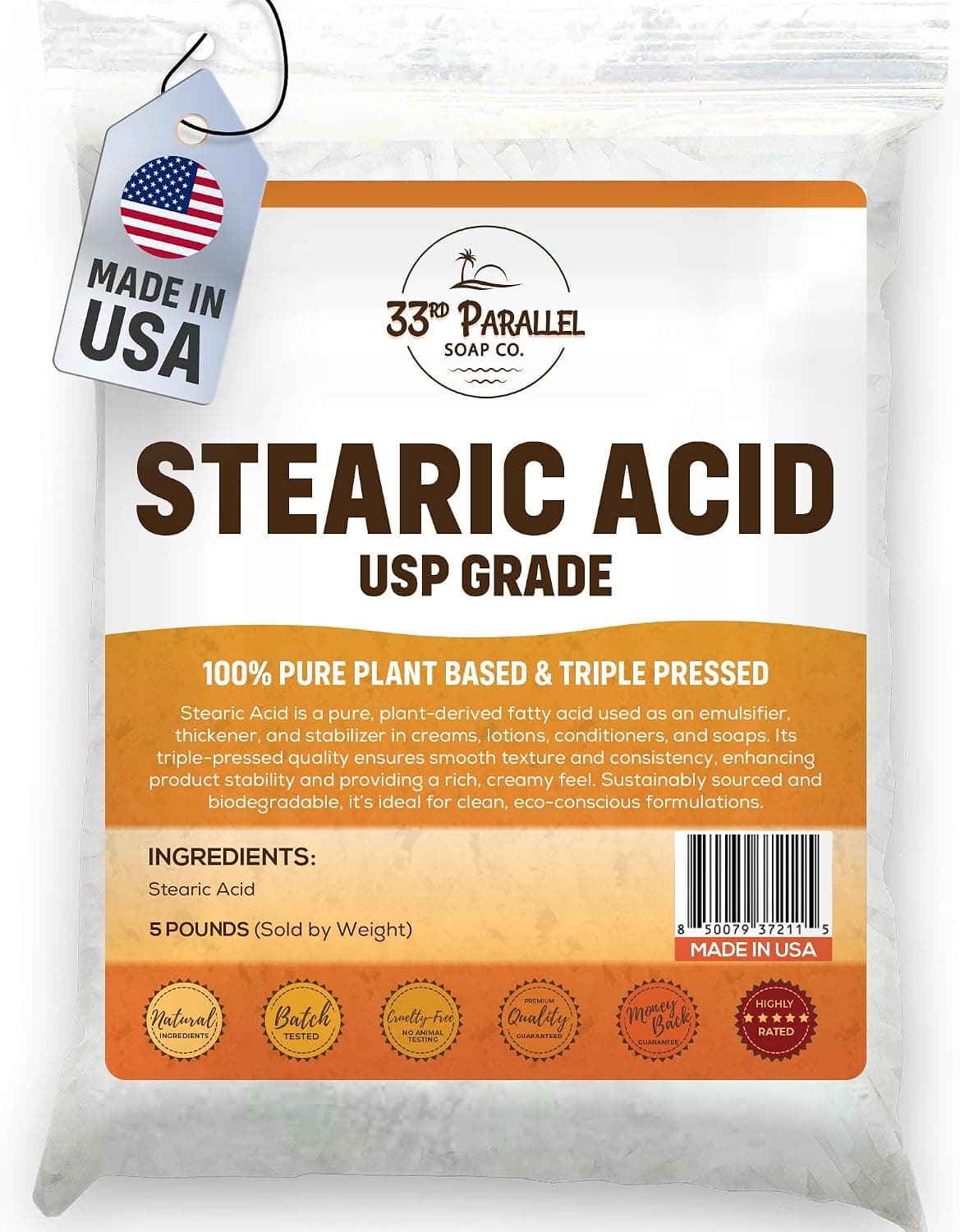
Stearic acid in a 5 Lbs bag of triple pressed NF/USP white flakes, a 100% plant-based hardener for soaps and candles.
Price range: $ (Budget)
What we liked
- + NF/USP grade suggests a clean, consistent material
- + 5 Lbs supply handles many pillar and votive batches
- + Plant-based flakes harden wax and improve mold release
Trade-offs
- - Too much stearic can cause cracking or mottling in soy
- - Add stearic gradually and test a small batch before scaling up
Who reaches for stearic acid
Stearic acid is a fatty acid additive sold here as white flakes, triple pressed to NF/USP grade and described as 100 percent plant based. Candle makers add it in small percentages to paraffin pillar and votive wax to harden the finished candle, improve opacity, and make the candle release from a metal mold more easily. Soap makers use the same material as an emulsifier and thickener that helps a bar hold its shape and gives lotions and creams a firmer texture. This 5 pound bag suits someone running enough batches to use up the material before it goes stale, rather than a once a year hobbyist who only needs a few ounces. If you exclusively pour soy or coconut container candles, you likely need this only occasionally, if at all, for special effects.
What triple pressed NF/USP grade means
Triple pressed refers to a refining step that removes more oleic acid and other impurities than a single pressing, leaving a purer, more consistent stearic acid flake. NF and USP are pharmacopeia grade designations, meaning the material meets standards originally set for pharmaceutical and food related uses, which in practice signals a cleaner, more predictable material than an unspecified industrial grade. Being plant based, it is typically derived from vegetable sources such as palm oil rather than animal tallow, which matters to makers who market their line as vegan. In candles, stearic acid is used at a small percentage of total wax weight, not as a primary wax, so a 5 pound bag goes a long way across many batches of pillar or votive wax.
Working it into a wax batch
In practice, stearic acid is melted into paraffin wax before pouring, and the flakes dissolve cleanly into hot wax without needing a separate double boiler step beyond what you already use to melt the base wax. It raises the melting point and opacity of the finished candle, which is part of why it is popular for pillar and votive work where a solid, releasable shape matters more than a translucent finish. Store the flakes in a sealed, dry container away from heat, since like any fat based material it can pick up moisture or odors over time if left open on a shelf. Because the bag is unbranded beyond the seller's own listing, there is no batch or lot traceability printed on the package itself, so keep your own notes if you need to track which bag went into which batch.
Where it helps and where it can backfire
Compared with additives built specifically for container candles, such as a wax modifier designed to fix wet spots or improve scent throw in soy, stearic acid is a more general purpose hardener rather than a targeted fix for one problem. Used correctly in paraffin pillars, it earns its place alongside troubleshooting supplies like a wick sample kit or a wax additive built for low melt point waxes. The catch is that stearic acid is not a universal fix, since adding too much to a soy or coconut soy container wax can cause the top to crack, mottle, or frost rather than stay smooth, so it is better suited to paraffin pillar work than to natural container blends unless a recipe specifically calls for it.
Verdict and who should pass
Buy this if you regularly pour paraffin pillar or votive candles and want a reliable hardening and mold release additive on hand in a size that will not run out mid season. It also earns a place in a soap maker's pantry for the same firming, thickening role. Skip it, or use it only in small tested amounts, if your main product line is soy or coconut container candles, since stearic acid is more likely to cause surface problems than solve them in those waxes. If traceability or a named brand matters for your supply chain, look for a listing from an established candle supply company rather than this more generic bag.
Frequently asked questions
Can I use stearic acid in soy container candles
You can, but only in small, tested amounts, since too much stearic acid in soy or coconut soy wax can cause cracking, mottling, or a frosted top rather than the smooth finish most container candle makers want.
What does triple pressed NF/USP mean for this stearic acid
Triple pressed is a refining step that removes more impurities than a single pressing, and NF/USP grade signals the material meets pharmacopeia purity standards, so it should be cleaner and more consistent than an ungraded industrial flake.
Why do candle makers add stearic acid to pillar wax
It hardens the wax, increases opacity, and helps the finished candle release cleanly from a metal pillar or votive mold, which is harder to achieve with straight paraffin alone.
How should I store leftover stearic acid flakes
Keep the flakes in a sealed, dry container away from heat and direct sun, since fat based materials like this can absorb moisture or odors if left open on a shelf.
Prices change often, so check the current price and availability on Amazon.
Check price on AmazonCandle Making Nest may earn a commission from the link above.