Vybar 260 Wax Additive for Candle Making - 1 lb Candle Wax Modifier for Container Candles and Low Melt Point Waxes - Candle Making Supplies Review (2026)
Updated September 14, 2026 · Research-based review
Our verdict
Vybar 260 is formulated for container candles and other low melt point waxes below 130 degrees Fahrenheit, giving soy and similar wax users a way to boost fragrance throw and surface finish. It is not built for pillars or high melt paraffin, so makers should check their wax type first and follow the label's hot wax safety warnings.
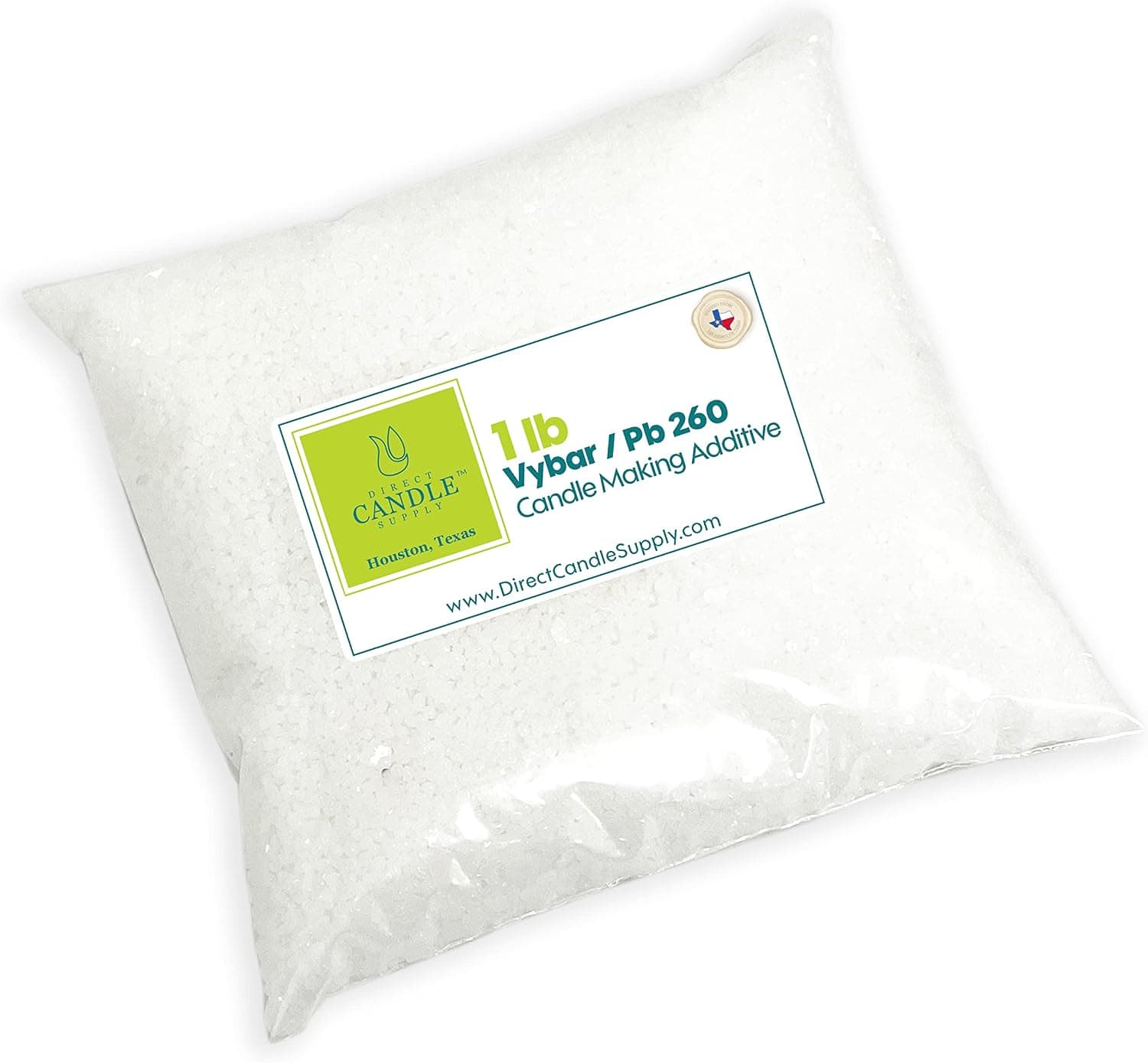
Vybar 260 wax additive in a 1 lb bag, a modifier for container candles and low melt point waxes.
Price range: $ (Budget)
What we liked
- + Vybar 260 is the version made for container and low melt waxes
- + Helps soft waxes hold higher fragrance loads
- + 1 lb bag covers many container batches
Trade-offs
- - Not suited to pillars, which need the high melt Vybar version
- - Soy-only brands may avoid petroleum based additives
Who this additive is for
Vybar 260 is aimed at candle makers working with container candles, wax melts, and other waxes with a melt point below 130 degrees Fahrenheit, which covers most soy and soy-blend waxes used in jar candles today. This is the counterpart to Vybar 103, which is built for the opposite case of high melt point paraffin used in pillars and votives, so the right buyer here is specifically a container or low melt wax user rather than someone pouring free-standing pillar candles. The 1 lb size suits hobbyists and small-batch sellers, since the recommended usage rate is small enough that a single pound covers a meaningful number of batches before running out, making it a lower-commitment entry point than buying a larger bulk bag before confirming the additive works well with a specific wax and fragrance combination.
What the additive does and how much to use
According to a specialty candle supply retailer, Vybar 260 is used at a rate of about a quarter to a half teaspoon per pound of wax, a notably small dose compared with some other additives, and using too much can actually trap fragrance inside the wax and reduce hot throw rather than improve it. Its stated benefits include enhancing fragrance projection, increasing opacity in the finished wax, and helping produce a smoother candle surface with fewer visible flaws. The same retailer notes it works with any wax type in principle but is specifically formulated for container candles, votives, and low melt point waxes, and is not the best match for wax tarts or melts, which typically rely on a different wax formulation than poured container candles.
Using Vybar 260 safely in a batch
The manufacturer's label, as described by a specialty retailer, states the product is for external use only, that contact with eyes and skin should be avoided, and that caution is needed when melting since hot wax can cause burns. It also instructs keeping the product out of reach of children and storing it tightly closed in a cool, dry place away from heat and sunlight, with a stated shelf life of about one year when stored properly. In practice, this means treating Vybar 260 like any other wax additive: melt it into the base wax before adding fragrance oil and dye, measure carefully rather than eyeballing given how small the effective dose is, and handle hot wax with the same care as any other stovetop or melter session, including keeping a fire extinguisher rated for oil or wax fires nearby.
How it compares with the high melt point version and troubleshooting kits
Against Vybar 103, the comparison is straightforward: Vybar 103 suits high melt point paraffin used in pillars and molded candles, while Vybar 260 suits low melt point waxes like soy used in containers, so the two are not interchangeable and buyers should match the product to their wax type rather than choosing based on price or size alone. Against The Wooden Wick Co.'s crackling wick sample kit, which ranks well above both Vybar products in a broader troubleshooting supplies guide, Vybar 260 solves a wax structure problem while a wick sample kit solves a burn performance problem, and a serious candle maker troubleshooting an inconsistent burn may eventually need both an additive and the right wick rather than treating either as a complete fix on its own.
Verdict and who should look at the alternative
This 1 lb bag earns its our score of 8.4 out of 10 rating as a correctly formulated, reasonably priced additive for container and other low melt point wax makers looking to improve fragrance throw and surface finish, with a small effective dose that makes one bag last through a meaningful number of batches. It is not the right choice for pillar, votive, or other high melt paraffin work, where Vybar 103 is the correct formula instead, and buyers should always check their base wax's melt point before choosing between the two. Given the manufacturer's own hot wax and skin contact warnings, new users should measure carefully, test on a small batch first, and follow standard hot wax handling precautions throughout the pour.
Frequently asked questions
What wax types is Vybar 260 designed for?
It is formulated for container candles and other waxes with a melt point below 130 degrees Fahrenheit, such as soy and soy-blend waxes, not for pillars or high melt paraffin.
How much Vybar 260 should be used per pound of wax?
Specialty candle supply retailers recommend about a quarter to a half teaspoon per pound of wax, and using more than needed can reduce hot throw.
Is Vybar 260 safe to handle?
The manufacturer's label calls for external use only, avoiding eye and skin contact, and caution around hot wax since it can cause burns; follow those instructions closely.
Should I use Vybar 260 or Vybar 103 for my candles?
Use Vybar 260 for container candles and low melt point waxes, and Vybar 103 for pillars, votives, and high melt point paraffin.
Prices change often, so check the current price and availability on Amazon.
Check price on AmazonCandle Making Nest may earn a commission from the link above.