How Much Wax Per Candle: A Jar Size to Wax Weight Chart and the Water Method
Published How we research
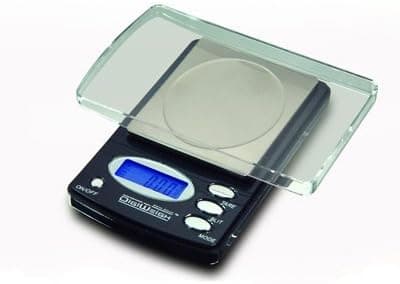
An 8 oz candle jar takes about 6 to 6.5 oz of wax by weight, a 4 oz tin about 3 to 3.5 oz, and a 16 oz jar about 13 to 14 oz, because wax is lighter than water and you do not fill to the rim. For any other vessel, fill it with water to the line you will pour to, weigh the water, and multiply by about 0.86 for soy or 0.9 for coconut blends and paraffin. That number is the finished wax weight; add fragrance on top of it and melt about 10 percent extra for topping off. The chart below gives starting weights for the vessels makers use most, and the sections after it show how to work out any size and how many candles a bag of wax will pour.
Wax weight chart for common vessels
The "oz" printed on a jar or tin is fluid ounces of volume to the brim. Wax is bought and weighed in ounces of weight, and a candle is poured about 0.5 inch below the rim, so the wax figure is always lower than the jar size. These are typical finished wax weights for soy container wax; coconut blends and paraffin take about 5 percent more because they are denser.
2 oz tin: 1.5 to 1.7 oz wax. 4 oz tin: 3 to 3.5 oz. 6 oz tin or jar: 4.5 to 5 oz. 8 oz straight-sided or jelly jar: 6 to 6.5 oz. 9 oz straight-sided jar: 7 to 7.5 oz. 10 oz tumbler: 8 to 8.5 oz. 12 oz jar: 9.5 to 10.5 oz. 16 oz jar or apothecary: 13 to 14 oz. 1 lb mason jar filled to the shoulder: about 12 oz.
Smaller formats: a standard tealight cup takes about 0.4 to 0.5 oz, a 15 hour votive about 1.75 to 2 oz, and a 6 cavity wax melt clamshell about 2.5 to 3 oz in total, or roughly 0.45 oz per cavity. In grams, multiply ounces by 28.35: an 8 oz jar is around 175 to 185 g of wax.
The water method for any vessel
Put the empty vessel on a digital scale, tare it, and fill with water to exactly where you want the wax to sit, usually 0.5 inch below the rim or just under the shoulder of a jar. Read the water weight in ounces or grams. Multiply by the density factor for your wax: about 0.86 for soy, 0.9 for coconut blends, parasoy and paraffin, and 0.96 for beeswax. The result is the wax weight the finished candle holds.
Example for a 10 oz tumbler: water to the pour line weighs 9.2 oz. For soy, 9.2 x 0.86 = 7.9 oz of wax. For a coconut blend, 9.2 x 0.9 = 8.3 oz. Round to the nearest 0.1 oz and write it on the vessel's spec card; you will reuse that number every batch.
Molded pillars and shapes work the same way: fill the mold with water, weigh, convert. Because mold wax shrinks as it cools and needs a second top-up pour, melt 15 to 20 percent extra for pillars rather than 10 percent. A scale that reads to 0.1 oz or 1 g is enough; one that reads to 0.01 oz is useful for fragrance on small batches.
Adding fragrance: wax plus oil equals the fill
Fragrance load is a percentage of the wax weight, not of the total. At an 8 percent load, 6.5 oz of wax needs 0.52 oz of fragrance oil, and the candle will contain 7.02 oz of material. That extra half ounce fills a little higher in the jar, which is fine for most pours but matters if you are already close to the rim.
If you want the total fill to land exactly on your water-method number, divide instead: target fill divided by 1.08 gives the wax, and the remainder is fragrance. For a 7 oz fill at 8 percent: 7 / 1.08 = 6.48 oz wax and 0.52 oz oil. Most makers do not bother with this precision for jars and simply treat the water-method figure as the wax weight.
Keep the load inside the range the wax maker publishes, usually 6 to 10 percent for soy and coconut container waxes and lower for some paraffins and all beeswax. Fragrance added above that limit does not fill the jar faster; it seeps out, pools on top or weakens the burn.
Batch math: how many candles from a bag of wax
A 10 lb bag is 160 oz. At 6.5 oz per 8 oz jar that is about 24 candles, before the 10 percent you melt extra for pouring losses and sinkhole top-ups. Plan on 21 to 22 full jars from 10 lb once you account for wax left on the pitcher walls and the second pour. A 45 to 50 lb case runs to about 100 to 110 of the same jar.
For a batch, work backwards: candles x wax per candle x 1.1 = wax to melt. Six 8 oz jars at 6.5 oz each is 39 oz, plus 10 percent is about 43 oz to melt, and at 8 percent load you add 3.1 oz of fragrance. A 4 lb pouring pitcher holds roughly 50 oz of melted wax, so that batch fits in one pour with room to stir.
Tins and melts are more forgiving because an under-pour is barely visible. Jars with straight glass walls show every millimeter, so for a product line pour by weight on the scale rather than by eye and your fill heights will match across the batch.
Why the number on the bag is not the number in the jar
Three things reduce the usable wax. First, density: soy flakes weigh about 86 percent of the same volume of water, which is where the 0.86 factor comes from. Second, headspace: 0.5 inch of empty glass at the top keeps the flame below the rim and leaves room for the melt pool. Third, loss: wax films the pitcher, thermometer and stirrer, and sinkholes in soy need a small second pour.
Wax also shrinks as it sets. Soy and coconut container waxes lose a little volume on cooling, which is why a jar that looked full at 135 F can sit a few millimeters lower the next morning. Paraffin shrinks more and pillar waxes most of all. The second pour, done at a slightly cooler temperature than the first, levels the top; your extra 10 percent is for that.
If you weigh the wax into each jar on the scale as you pour, the finished candles will all hold the same amount, which is what customers and your own burn tests need. Eyeballing to a fill line in a hot pitcher is the main reason two candles from the same batch burn for different lengths of time.
Frequently asked questions
How much wax for an 8 oz candle? About 6 to 6.5 oz of soy wax by weight, or 6.5 to 7 oz of a coconut blend or paraffin, poured to about 0.5 inch below the rim. Add fragrance on top: 0.5 oz at 8 percent.
Does the type of wax change how much I need? Slightly. Beeswax is the densest common wax (factor 0.96), then paraffin and coconut blends (0.9), then soy (0.86). The same 8 oz jar takes roughly 6.3 oz soy, 6.6 oz paraffin or 7 oz beeswax.
How much wax does a 4 oz tin hold? Around 3 to 3.5 oz. Most 4 oz tins are nearer 3.5 fl oz of usable space once you leave room for the lid, so 3.2 oz of soy is a common working figure.
Should I measure wax by weight or volume? Always by weight. Flakes, pastilles and chunks trap different amounts of air, so a cup of flakes can weigh anywhere from 5 to 7 oz. A scale makes the recipe repeatable; a measuring cup does not.
Products from this article
The highest-scoring picks from the buying guides mentioned above. Scores are our editorial assessment, not customer ratings.
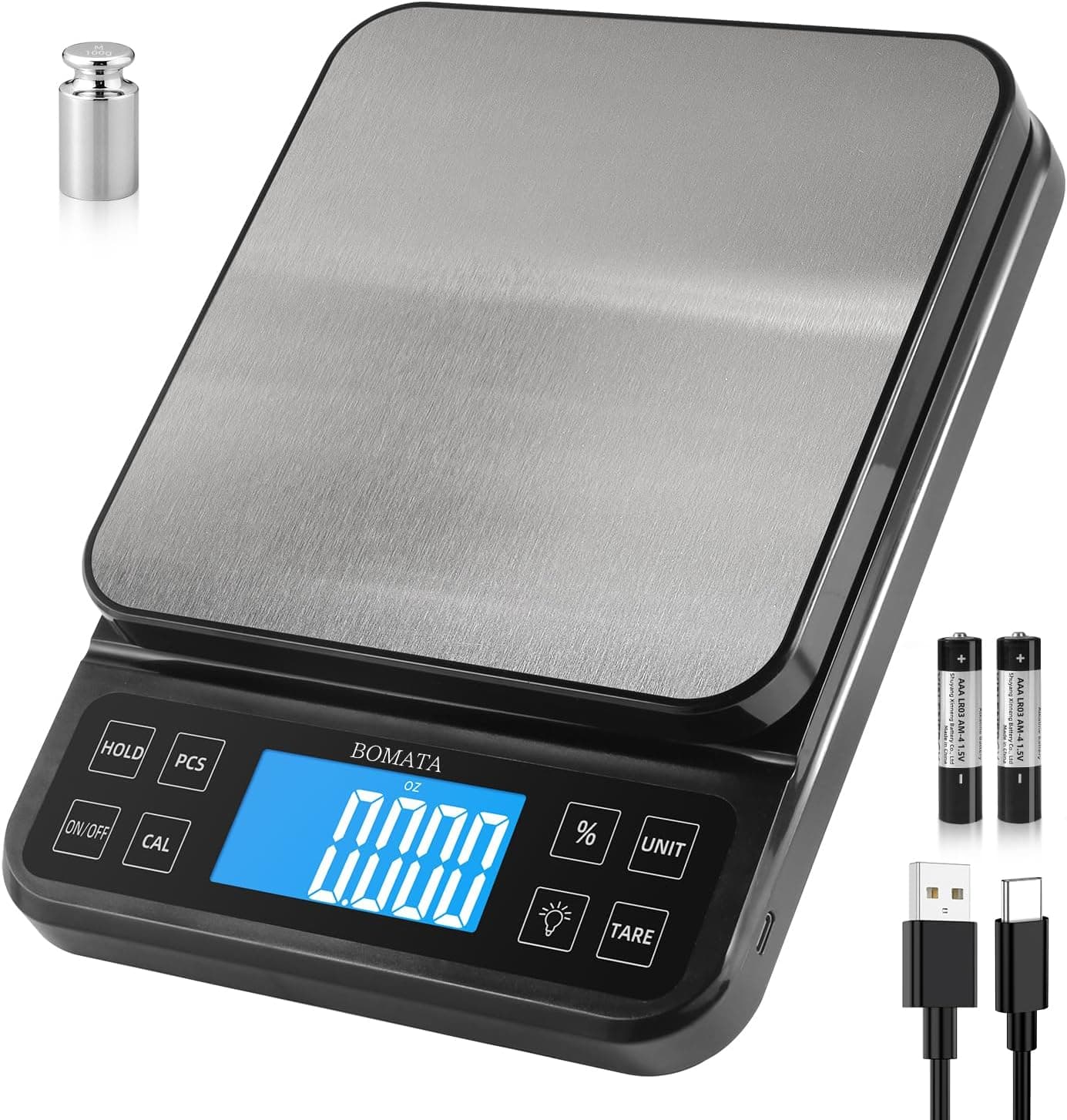
+ Percentage function helps calculate fragrance load quickly
From our guide: Best Digital Scales for Candle Making
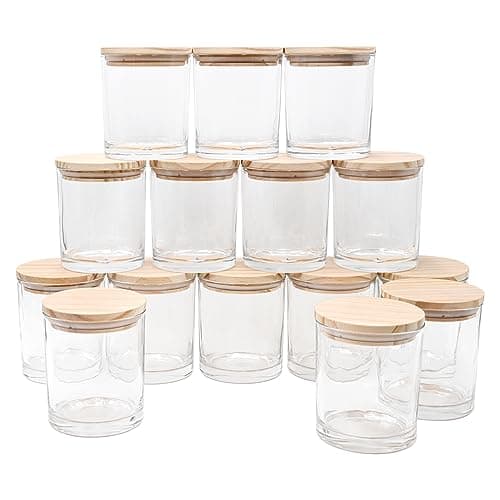
+ Fifteen 10 oz (296 ml) jars in one color, enough for a full batch with matching vessels
From our guide: Best Candle Jars for Homemade Candles
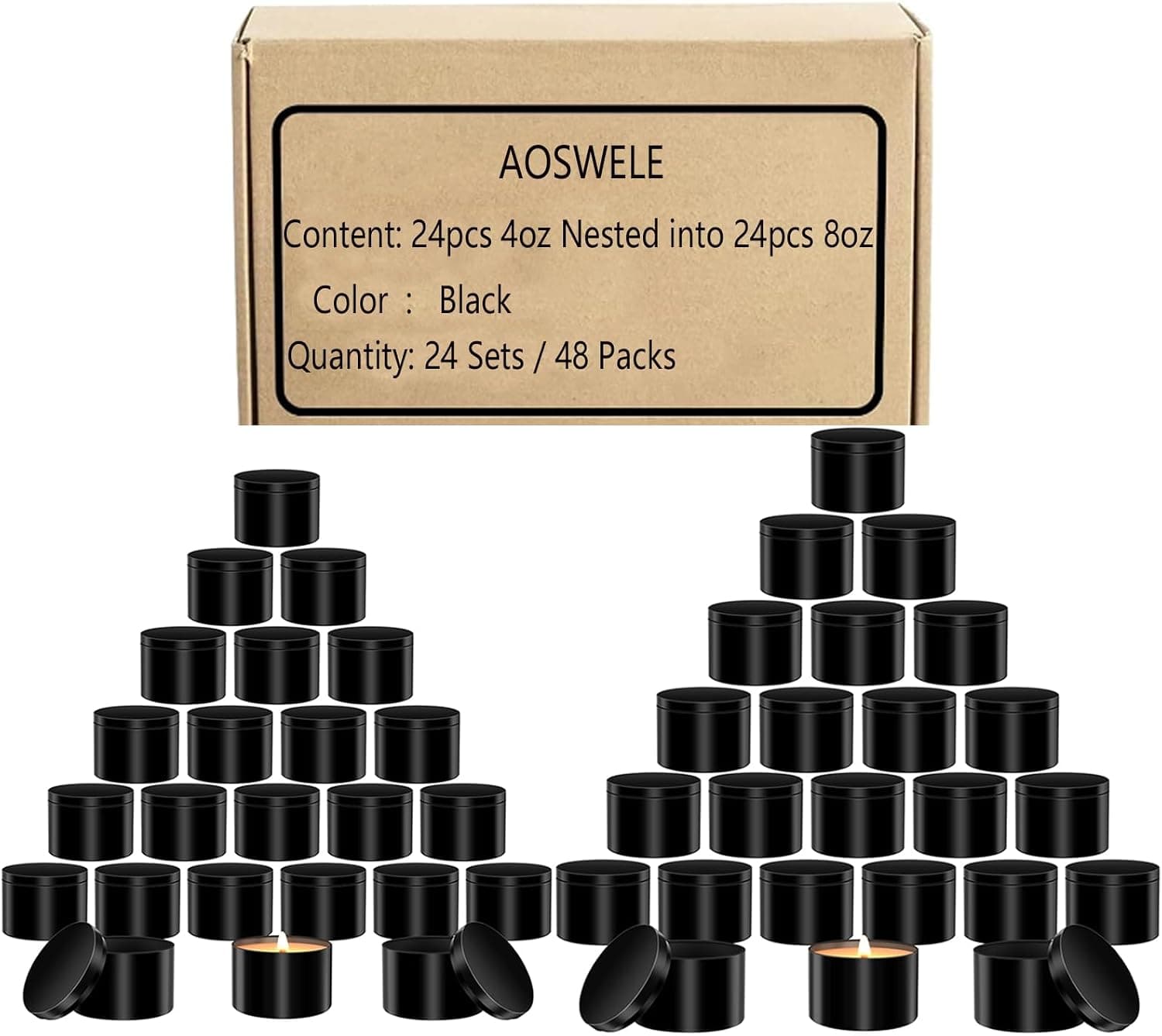
+ Two sizes let you sell travel and full size candles in matching tins
From our guide: Best Candle Tins for Travel and Sample Candles
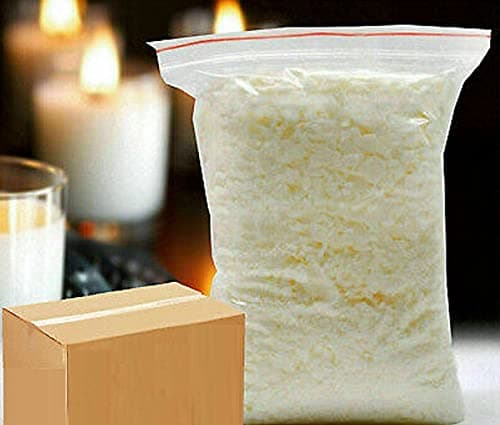
+ Three separate 10 pound bags keep unopened wax sealed while you work through one
From our guide: Best Soy Wax for Candles
Popular right now
- Best Heat Guns for Candle MakingBuying guide
- Best Wooden Wicks for CandlesBuying guide
- Best Soy Wax for CandlesBuying guide
- Pillar wax explainedGlossary
- Best Paraffin Wax for CandlesBuying guide
- Choosing Safe Vessels for Container CandlesArticle
Based on the last 28 days of search and visitor data.