What to Do With Leftover Candle Wax: Reuse Ideas and What to Avoid
Published How we research
Leftover candle wax can be reused in several ways: remelt it into a new candle, pour it into molds for wax melts, use it to top off sink holes or save it for a future batch. The key is to sort scraps by type and scent, filter out debris and wicks, and melt them gently in a water bath. Mixed scraps give unpredictable results, so treat reused wax as a new recipe that needs testing. This guide shows how to collect, sort and reuse leftover wax, and what to throw away instead.
Products from this article
The highest-scoring picks from the buying guides this article links to. Scores are our editorial assessment, not customer ratings.
As an Amazon Associate we earn from qualifying purchases. This does not change our picks. Affiliate disclosure
New to Prime? Try Prime free for fast, free shipping on eligible items.
+ 4 pack of 12 cavity trays pours many melts in a single session
From our guide: Best Wax Melt Supplies
+ Includes the 2QT base pot, so no saucepan is needed
From our guide: Best Double Boilers for Melting Candle Wax
+ Dual temperature 680 and 450 degrees gives strong control
From our guide: Best Heat Guns for Candle Making
+ 3 bags of 10 pounds keep most wax sealed until you need it
From our guide: Best Container Wax for Candles
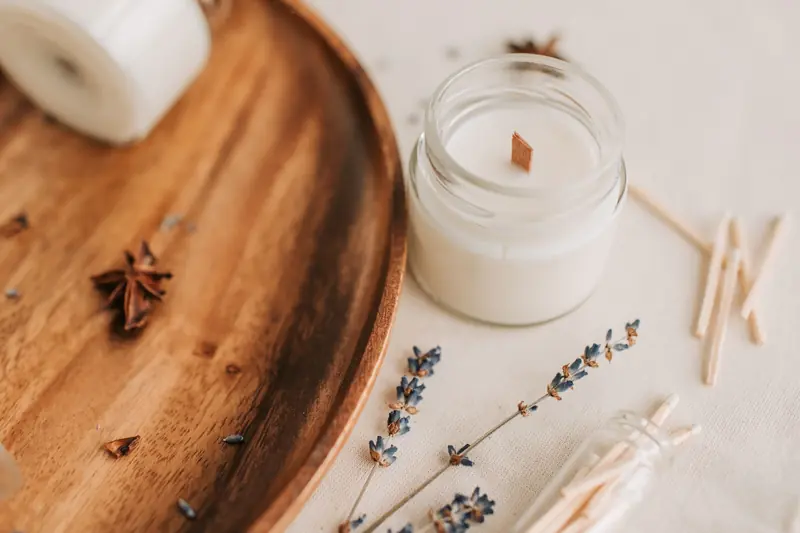
Collect and sort your scraps
Wax scraps come from pouring leftovers, trimmed tops, test candles and the last half inch in old jars. Keep them in labelled tins or bags by type, such as soy, paraffin, beeswax and coconut, since waxes melt at different temperatures. Mixed waxes are possible but unpredictable.
Sort by scent as well. A pile of mixed fragrances smells muddled, while scraps of the same or similar scents combine nicely. Unscented scraps are the most flexible and can take on a new fragrance. Keep dyed wax separate from white wax to protect pale batches.
Clean the wax before reuse
Remove wicks, metal tabs, stickers, dust and burnt debris. Melt the scraps in a pitcher set in a water bath, and pour them through a fine mesh strainer or an old nylon stocking into a clean container to catch fibers. Let the strained wax set, then break it into pieces for storage.
Never melt wax directly on a burner. Use indirect heat, watch the temperature and keep the lid nearby. Wax that smells burnt or has darkened should be discarded.
Idea 1: pour new candles
Reclaimed wax can become a new container candle or a rustic pillar. Because the exact mix is unknown, treat the batch as a test: pick a wick conservatively, burn a sample on a heat-safe surface and watch the melt pool, flame and soot. Mixed waxes may need a different wick size from either ingredient.
For a more reliable result, blend scraps with fresh wax of a known type, so the fresh wax sets the main behavior. Label the finished candle with the wax and scent mix, and keep notes.
Idea 2: make wax melts
Wax melts do not need a wick, which makes them a good use for scraps. Pour clean wax into silicone molds or clamshell packs, optionally adding a little fragrance oil within the supplier's limits, and let it set. Melts are warmed in a wax warmer, never burned.
Because there is no flame and no wick to size, melts are forgiving. Mixed scents and colors can look attractive as marbled melts, though fragrance blends may clash, so test them in a warmer first.
Idea 3: top-ups and repairs
Keep a small tin of clean scraps from your usual wax for repairs. When a freshly poured candle develops a sink hole around the wick, a brief pass with a heat gun and a thin top pour of melted wax fills the gap. Matching the wax type and scent gives the best results.
Scraps can also be used to coat wick tabs, seal the top of a jar for storage or practice pouring technique before using fresh wax.
How to test a reclaimed batch
Because scraps vary, test before you share or sell anything made from them. Pour a small candle, let it cure for a few days and burn it for several hours at a time on a heat-safe surface. Look at the melt pool, flame height, soot and jar temperature, and note the wax mix and wick used.
If the candle tunnels or drowns, try a larger wick. If it smokes or flickers high, try a smaller one. Reclaimed wax is a good teacher, since it shows how small changes shift the burn.
Storing scraps until you need them
Store scraps in sealed tins or lidded jars, away from heat and dust. Labels with the wax type and scent make future sorting quick. Keep fragranced scraps away from unscented ones to avoid scent transfer.
Do not let the pile grow indefinitely. Set aside a day each month to melt, strain and reuse what has built up, or the collection can turn into a box of unlabeled lumps nobody wants to use.
Safety while remelting scraps
Reclaimed wax carries the same fire risk as new wax, and unknown fragrance content can mean an unknown flash point. Keep melting temperatures modest, stay with the pitcher the entire time and keep a lid close. Never leave it unattended or melt it on a direct flame.
Wear closed shoes and heat-resistant gloves, work in a ventilated space and keep children and pets away. If a scrap smells odd or has been exposed to unknown chemicals, it is safer to discard it.
Gift and craft ideas that use little wax
Small amounts of wax can be turned into fire starters in paper egg cartons, wax-dipped seals for letters, or a protective coating on wooden handles and tools. Check each idea for fire safety and use only wax that you know is clean. If you plan to give away anything made from reclaimed wax, label it clearly and describe what it contains.
What not to reuse, and safe disposal
Do not reuse wax that has been contaminated with food, water, oil or unknown materials, or that smells burnt. Discard it in the trash once solid, and never pour it down a drain, where it hardens and can block pipes. Avoid burning wax scraps in a fire pit or on a stove.
If you have far more wax than you can reuse, ask whether a local craft group or school might use it, but only pass it on if you can describe what it is. Clear labeling helps the next person use it safely.
Popular right now
- Best Heat Guns for Candle MakingBuying guide
- Best Wooden Wicks for CandlesBuying guide
- Best Soy Wax for Candle MakingBuying guide
- Pillar wax explainedGlossary
- Best Paraffin Wax for CandlesBuying guide
- Choosing Safe Vessels for Container CandlesArticle
Based on the last 28 days of search and visitor data.